Gitcoin 3.*: The Utility-Accrual Flywheel
Objective
Explain how utility moves through the Gitcoin network in the 3.* era and how we compound that utility round after round.
In this hypothetical flywheel, [gtc’s governance would relate to gitcoin’s portfolio of apps.] (the original phrasing said ‘gtc becomes upside’; that concept was not adopted and gtc confers no upside.)([TEMP CHECK] GTC = Utility in Gitcoin’s portfolio of onchain capital allocation apps - #2 by Recce)
3.* Goals
Goals from: TEMP CHECK - Gitcoin 3.3 (3,3): An Evolutionary Arena for Capital Allocation :
- Fund and help solve Ethereum’s biggest problems.
- Evolve best-in-class capital allocation software.
- Achieve “3,3,3,3” alignment across stakeholders — builders, domain providers, funders, and Gitcoin — so cooperation compounds for everyone.
What “3,3,3,3” Means (Quick Note) - Shorthand for mutually reinforcing positive sum games among four stakeholder groups: Ethereum, domain providers, funders, and Gitcoin. If each plays positive-sum games with the others, the flywheel spins faster for everyone.
The Flywheel (High Level)
We’re building a two-loop system that feeds itself:
- Program loop (purple): run high-quality domain programs and rounds that discover, support, and level up the best problem-solving builders and software.
- Investment loop (yellow): stand up an investment function that backs the strongest software emerging from the program and responsibly manages the position to reinforce the network.
- Connection between loops: invest in the software that proves traction inside the program, which in turn improves future rounds and the overall network.
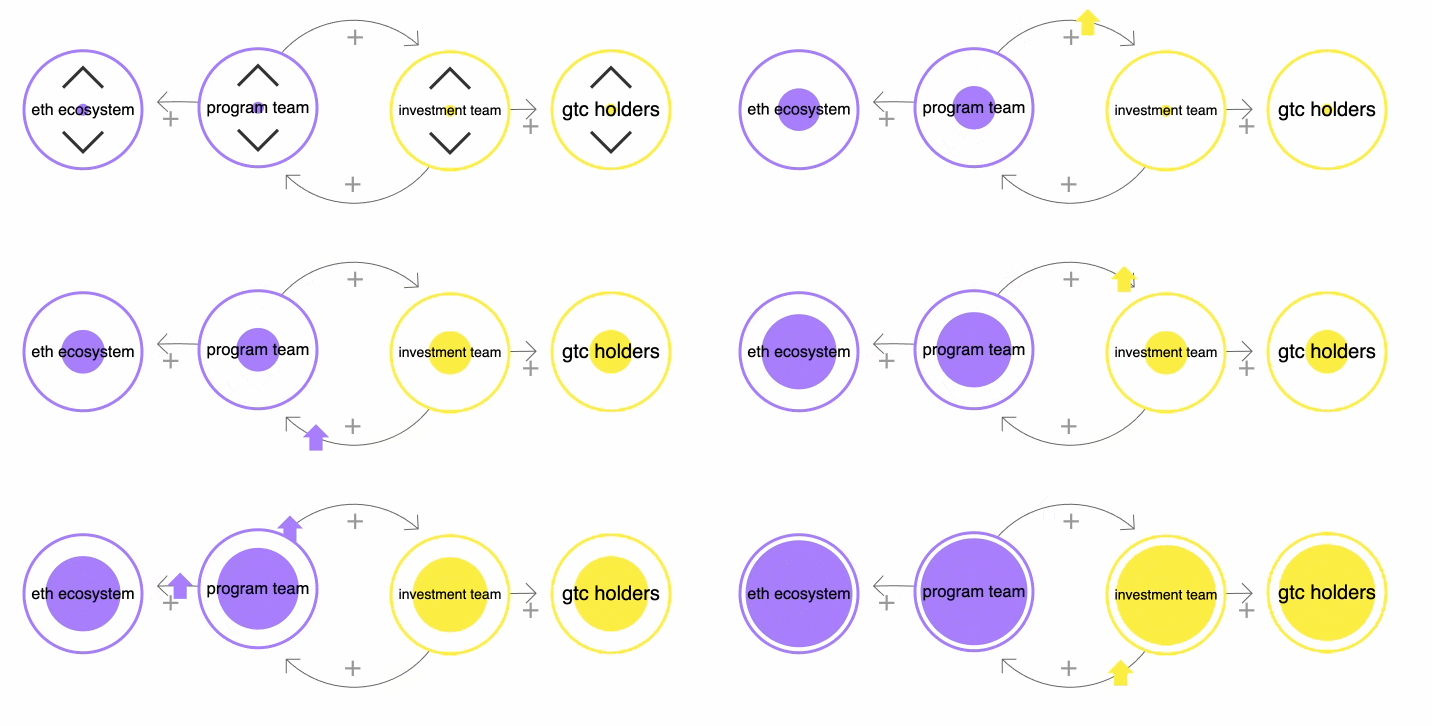
The Flywheel (High Resolution)
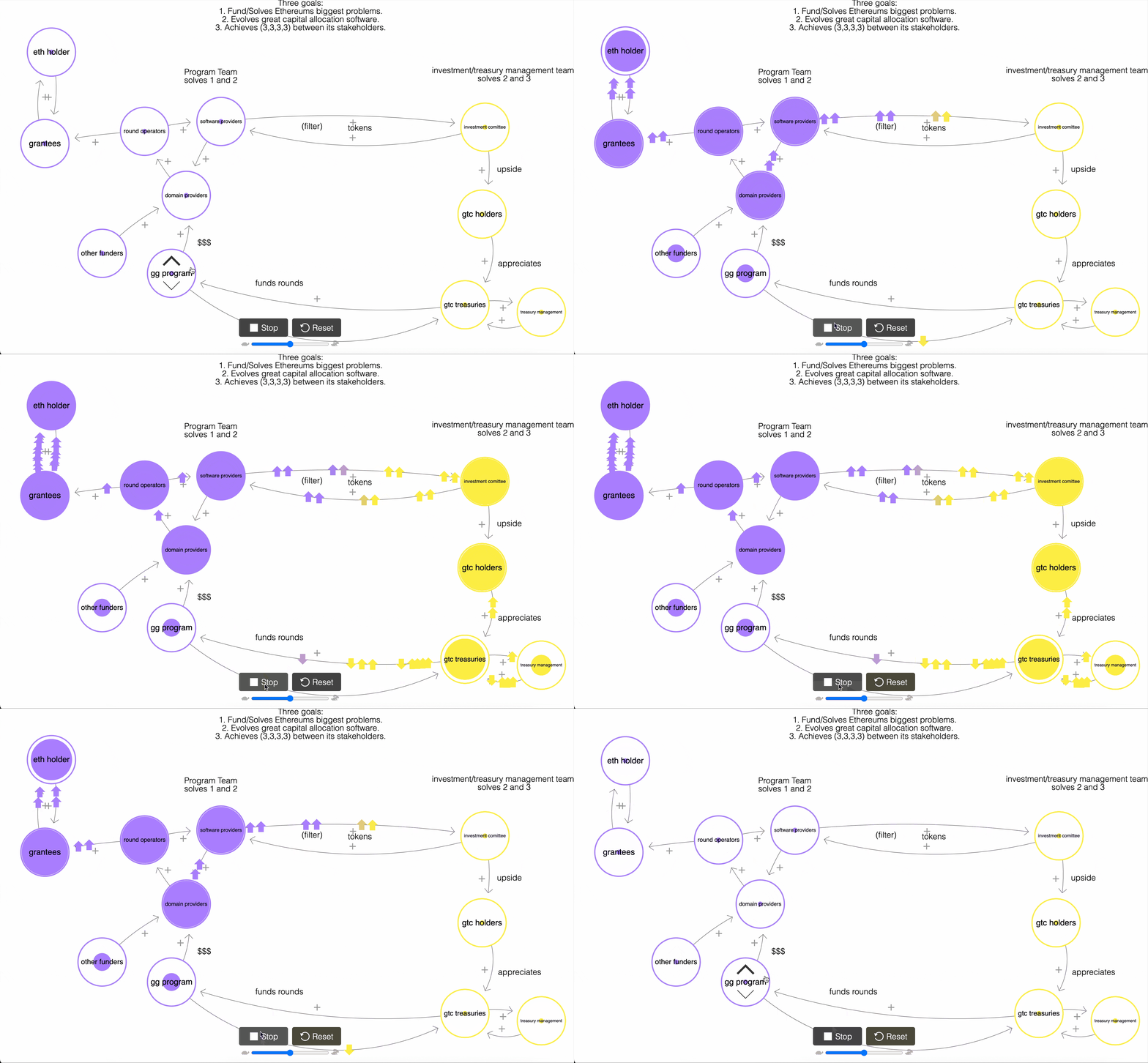
Purple = programs that surface and level up problem-solving builders. Yellow = investment that backs the best software and feeds gains back into the next epoch.
How to read the high-resolution diagram
The big picture: it’s two interlocking circuits that pass utility back and forth. Purple shows the program side (domain programs and rounds). Yellow shows the investment side (how we back the best software that emerges and cycle gains back in).
- Start at the program circuit (purple)
Follow the arrows from domain setup to rounds to builder support. You’re tracing how good domains attract great applicants, how rounds surface signal, and how builder enablement turns that signal into real software that attacks Ethereum’s hardest problems. - Watch the handoffs
Look for the touchpoints where the program circuit hands promising software to the investment circuit. These are the “decision gates” where we apply filters like upside, momentum, founder quality, and credible return paths. - Move through the investment circuit (yellow)
From sourcing to diligence to position management, this loop shows how capital, treasury ops, and post-investment help compound outcomes. The return arrows point back to the program, indicating both capital recycling and capability upgrades for the next epoch. - Trace the feedback loops
Every loop that points back into earlier steps represents a learning or compounding effect. Faster iteration on domains, better program ops, sharper eval criteria, and stronger post-investment support all accelerate the flywheel. - Read it like a system, not a sequence
It’s intentionally high-resolution so you can spot bottlenecks and reinforcing links. When you see multiple arrows converging on a step, that’s a leverage point. When you see arrows diverging, that’s where we create optionality. - What to look for each epoch
- Are we attracting better domain operators and stronger applicants round over round?
- Are our filters reliably surfacing investable software?
- Are returns and learnings actually improving the next round’s throughput and quality?
Why This Matters
When you can see how utility flows, you can see what must be excellent. The diagrams make the dependencies explicit: if programs, software, and capital are each strong and connected, the whole network compounds.
What Must Be True
- Be outstanding at recruiting and supporting domain providers who can run great rounds and partner with great software builders focused on Ethereum’s hardest problems.
- Be disciplined at selecting investable software teams (strong upside, momentum, founders, PMF, credible return path) and have the treasury/back-office to manage and help those positions win. (treasury strategy discussion; any returns would belong to the organizational treasury, not to gtc holders)
- Improve every epoch (each GG round). If we keep upgrading the quality of software providers, domain operators, and round operators — and growing the balance sheet — we create an upward spiral.
In Conclusion
- Run great domain/rounds that elevate great software (purple).
- Invest in the best software that emerges and manage those stakes well (yellow).
- Use the returns and learnings to make the next rounds even better.
- Keep doing this every epoch until the network compounds into an upward spiral solving Ethereum’s biggest problems.
clarification (added 2026-08-04): this post was exploratory thinking shared for community debate, not an offer or a promise. gtc is a governance token with no economic rights, as it has been since launch in may 2021. finances discussed on the gov forum are those of gitcoin’s organizational entities. the flywheel and investment loop here were concept diagrams for debate; no investment function was stood up, and the diagram’s ‘upside to gtc holders’ arrow depicts a hypothetical that was not adopted and would confer no rights. dyor.
Disclaimer: This post is for informative purposes only and is not financial advice. This post reflects my personal views, not a decision or commitment by Gitcoin governance. Forward-looking items in it are targets, not commitments. The information in these posts is subject to change as we continue learning. This post may contain estimates, may contain errors, and is provided on a best-effort basis. DYOR, do not make any financial decisions based on these posts.