GG24 Public Goods Tooling Development Round: Full Retrospective
Follow-up to the December Progress Report posted previously. All round activity is visible atapp.gardens.fund and impact reports are tracked on Karma GAP.
Overview
The GG24 Public Goods Tooling Development Round ran from October 2025 through March 2026 as part of Gitcoin’s GG24 funding season. It was designed not to fund public goods themselves, but rather the meta-layer supporting Ethereum’s public goods: the tools and protocols that communities and ecosystems depend on to coordinate, fund, and measure the effectiveness of their work.
This retrospective covers the full arc of the round from application through retro reward distribution, evaluates results against stated goals, and draws out lessons for the community building in this space.
The round allocated $123,800 in total, distributing $83,800 in proactive funding to 12 projects across two conviction voting pools, and awarding $40,000 in performance-based retro funding to projects that delivered measurable impact. An operation fee of $20,000 (16.1% of the total round funding), paid for work of the Round Operators and Evaluation Judges over the 6 months of the funding round.
Round Context and Goals
This round aimed to make targeted improvements in the Public Goods ecosystem of the Ethereum network. Its stated goals were to increase interoperability between tools and protocols, create concrete cross-project collaborations, improve UI/UX pain points in public goods funding workflows, and grow the maturity of projects moving tooling toward production readiness.
To pursue these goals, the round introduced conviction voting as its primary allocation mechanism, structured a two-tier funding model separating early-stage experimentation from mature infrastructure work, and ran a retro funding phase to correct allocation toward actual impact rather than proposal quality.
Structure
Two Tiers of Proactive Funding
The round split its proactive funding between two pools with distinct purposes.
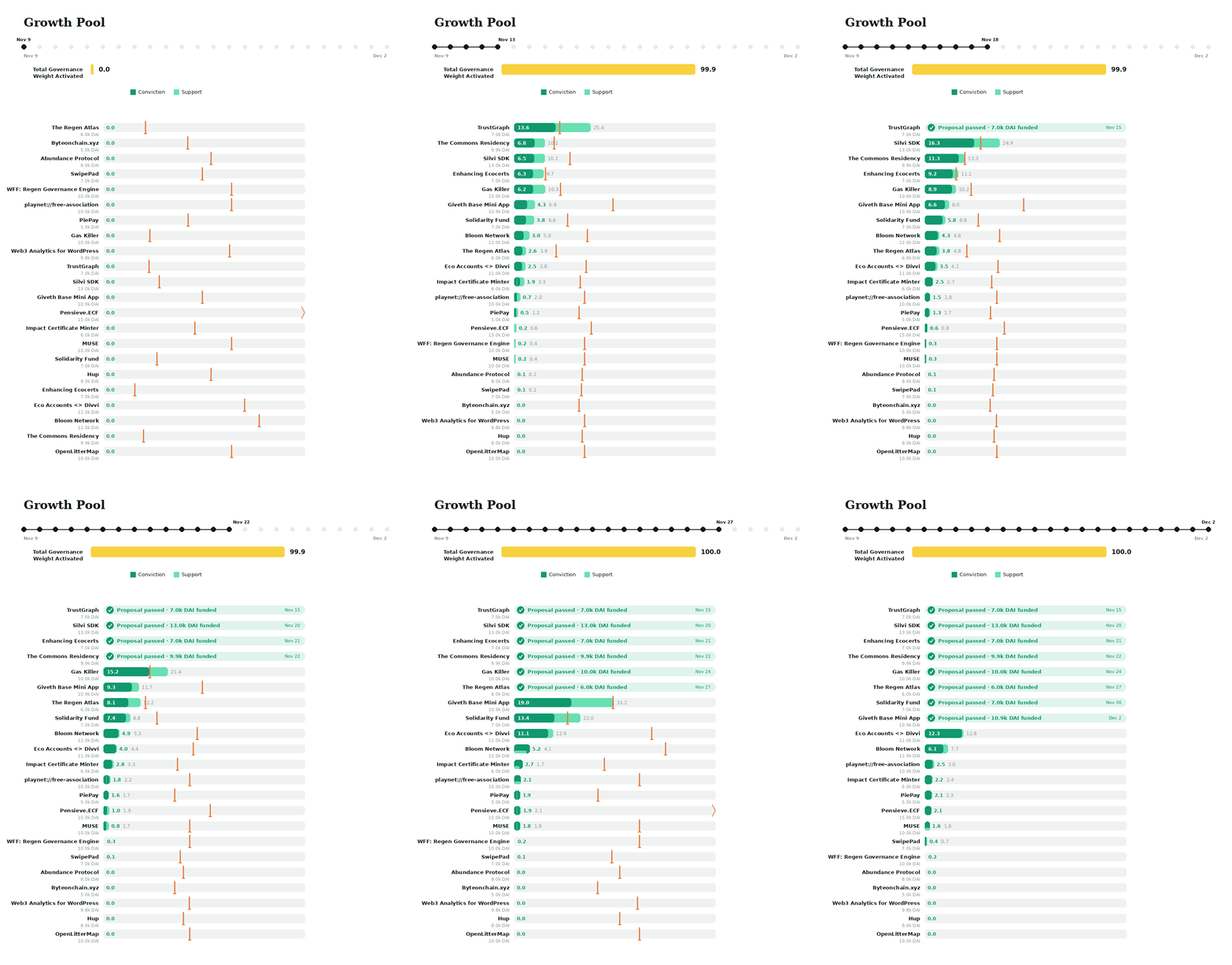
The Growth Pool ($70,000) targeted experienced teams addressing critical infrastructure needs, with proposals in the $5,000 to $13,000 range. Governance was handled by a nine-member Evaluation Council drawn from protocol teams, domain experts, and active builders. Eight proposals passed the conviction threshold, distributing $70,800 in total.
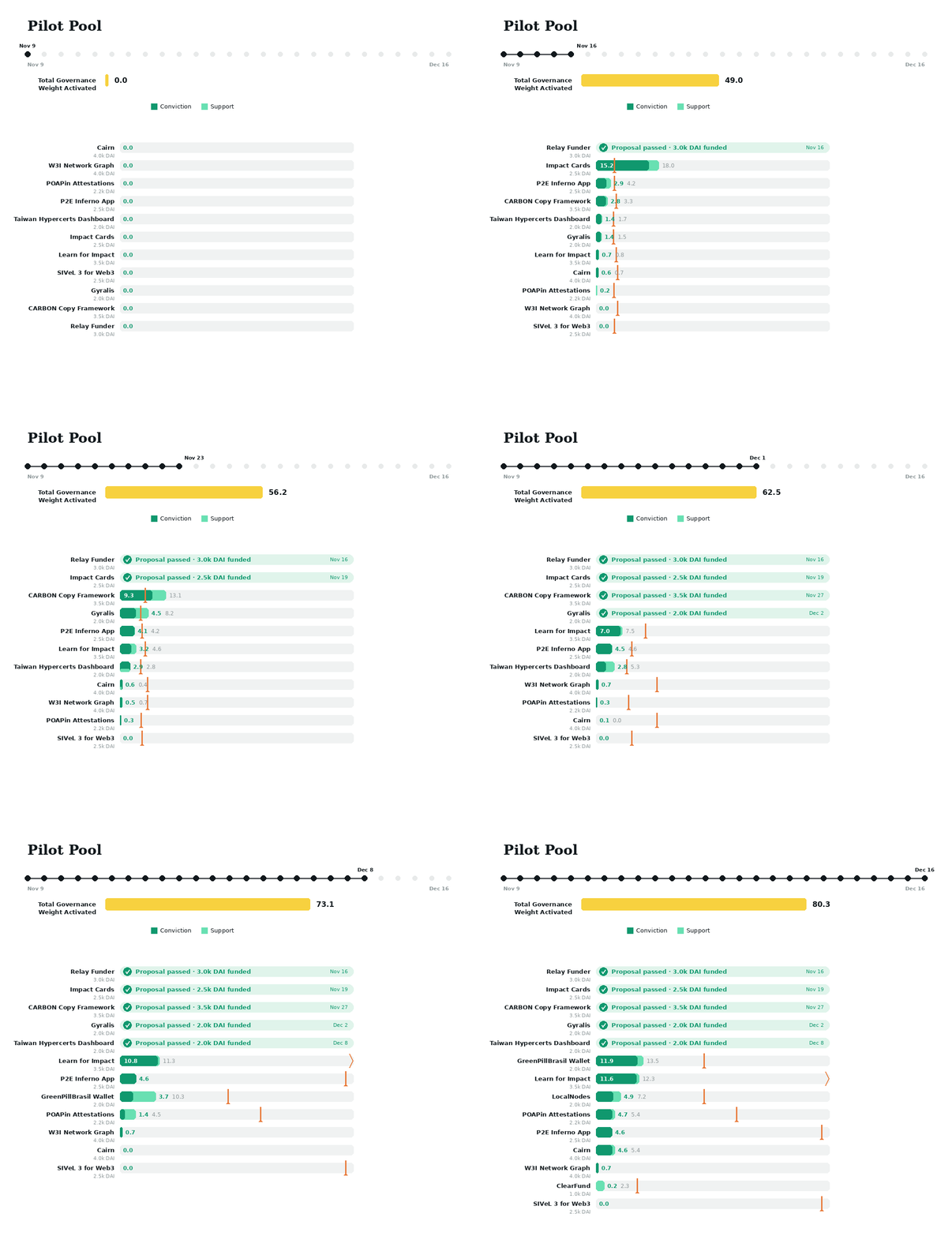
The Pilot Pool ($15,000) offered smaller grants of $1,000 to $3,500 for emerging teams testing innovative but unproven ideas. This pool was governed by an open community of Allo Patron NFT holders. Four proposals were funded, distributing $11,000 in total.
Both pools used conviction voting with a two-day half-life and a 10% minimum conviction threshold. This meant proposals had to sustain support over time to pass, giving evaluators time to assess allocations from other judges and adjust their support dynamically as more information came in.
Application Process
Proposals were drafted first in Charmverse, where the Evaluation Council and community provided open feedback. After iterating, builders posted final proposals to Gardens, where they could no longer be edited. This two-stage flow separated the iterative work of improving a proposal from the commitment of submitting it for evaluation.
All funded projects were required to set up a Karma GAP project page for milestone tracking and to report activity using the Common Impact Data Standard (CIDS) framework across four categories: Interoperability, Collaboration, UI/UX, and Product Growth.
Retro Funding
The retro phase, initially budgeted at $60,000, distributed $40,000 to builders based on demonstrated impact rather than projected potential. Two factors reduced the available amount: Public Nouns’ funding proposal failing to reach quorum, and ETH price depreciation on a portion of funds held in that asset.
The Retro Funding deadline was January 27, 2026, giving projects approximately 2 months to complete the work scoped in their proposal. The round allowed for projects that did not get proactive funding to still be eligible for retroactive funding if they met the application requirements of the round.
Retro scoring was conducted by three judges using the round’s evaluation rubric applied to Karma GAP milestone submissions. Each project received an Impact %, representing their share of total value created across the cohort. Proactive funding was subtracted from each project’s proportional share of the total raised, and the remainder was distributed from the retro budget proportionally. Projects that submitted impact reports but scored below 5% received a flat $200 reimbursement for their time.
This methodology ensured that a funded project that underdelivered did not earn additional retro allocation, and that an unfunded project that delivered strong results was rewarded retroactively.
Round Results
Growth Pool ($70.8k)
Gardens link: Gardens - Growth Pool
| Project | Amount |
|---|---|
| Silvi SDK: Open and Permissionless Reforestation Infrastructure | $13,000 |
| Giveth as a Base Mini App | $10,900 |
| Gas Killer: Super Scaling Ethereum Computation | $10,000 |
| The Commons: A Builder Residency and Pop-Up Cities Platform | $9,900 |
| Solidarity Fund | $7,000 |
| Enhancing Ecocerts: From Creation to Cross-Chain Funding | $7,000 |
| TrustGraph: An Interoperable Trust Layer for Ethereum | $7,000 |
| The Regen Atlas: Actions View | $6,000 |
| Total | $70,800 |
The animation below shows the pool’s governance over time using onchain data, showing governance weight activations, support distribution, conviction growth, and proposal execution over the course of the proactive funding portion of the round:
Pilot Pool ($13k)
Gardens link: Gardens - Pilot Pool
| Project | Amount |
|---|---|
| Funding Readiness Framework by CARBON Copy | $3,500 |
| Relay Funder: Aid to Refugee Communities | $3,000 |
| Impact Cards: Interoperable, Attested | $2,500 |
| Gyralis | $2,000 |
| Taiwan Hypercerts Dashboard | $2,000 |
| Total | $13,000 |
And here’s an animation of the Pilot Pool’s conviction voting results over time on Gardens:
Retroactive Funding ($40k)
| Title | Total Value Created | Proactive Funding | Total Eligible Funding | Retro Funding |
|---|---|---|---|---|
| Prosperity Pass | 11269 | 0 | 8485 | $8,485 |
| Gainforest (Ecocerts) | 11116 | 7000 | 10099 | $3,099 |
| Regen Atlas | 10352 | 6000 | 9276 | $3,276 |
| Silvi | 10454 | 13000 | 13000 | 0 |
| Impact Certificate Miner | 8873 | 0 | 6680 | $6,680 |
| Relay Funder | 8618 | 3000 | 7230 | $4,230 |
| Funding the Commons | 8312 | 9900 | 9900 | 0 |
| Impact Cards | 7598 | 2500 | 6338 | $3,838 |
| Solidarity Fund | 7394 | 7000 | 7297 | $297 |
| DAO.archi | 6833 | 0 | 5145 | $5,145 |
| Giveth | 6527 | 10900 | 10900 | 0 |
| Taiwan Hypercerts | 5711 | 2000 | 4794 | $2,794 |
| Carbon FRF | 5303 | 3500 | 4858 | $1,358 |
| P2E Inferno | 5303 | 0 | 200 | $200 |
| Hup | 5303 | 0 | 200 | $200 |
| Gas Killer | 4436 | 10000 | 10000 | 0 |
| ClearFund | 2193 | 0 | 200 | $200 |
| Learn for Impact | 204 | 0 | 200 | $200 |
Impact Across the Four Meta Areas
Interoperability
Interoperability was the round’s highest-weighted goal and the area where the cohort performed most visibly. Nearly every funded project integrated at least two of the round’s priority protocols: EAS, Hypercerts, Karma GAP, Hats Protocol, Superfluid, Safe, and DAOstar’s OpenGrants.
TrustGraph built bidirectional trust signals between Safe and Gardens, creating a reusable attestation layer that other tools can query. Impact Cards implemented version-locked, expert-attested claims built on EAS schemas, creating a composable evidence primitive others can incorporate. The Regen Atlas developed a spatial aggregation layer for impact data across chains. Ecocerts built a cross-chain marketplace for verified ecological impact credentials using Hypercerts. CARBON Copy established a standardized framework for assessing project funding readiness against shared criteria.
The cohort demonstrated that composability between public goods tools is achievable with modest, targeted grants when builders are given clear integration targets and access to technical guidance from protocol teams early in the process. The tooling showcases, which featured live presentations from EAS, Hats Protocol, Superfluid, and OpenGrants, contributed to this directly. Several proposal revisions incorporated integration pathways that were not in the original drafts but emerged from showcase Q&A.
Collaboration
Cross-project collaboration was a stated goal of the round and something the cohort pursued in meaningful ways, though largely through composability rather than formal co-development. Teams that passed shared common infrastructure choices and referenced each other’s work in their impact reports.
The Evaluation Council itself functioned as a collaboration surface. Council members from Hats Protocol, Superfluid, OpenGrants, and Gardens evaluated proposals they had technical context on and flagged integration opportunities that proposal authors had not identified. Several evaluations led to direct async conversations between builders.
The Greenpill Dev Guild’s office hours sustained consistent attendance across the round’s duration and served as a recurring space for builders to encounter each other’s work. This ambient exposure produced more informal collaboration than the formal processes did.
Where the round fell short on collaboration was in creating lasting structural ties between teams. The round did not establish co-maintenance agreements, shared governance arrangements, or documented integration roadmaps between cohort members. These are outcomes that require more scaffolding than a grant round naturally provides, and worth designing for more explicitly in future rounds.
UI/UX
UX improvement was the second-highest priority in the Growth Pool rubric, and several funded projects addressed it meaningfully. Giveth’s Base mini app integration reduced the number of steps required to donate for Base chain users. Gas Killer abstracted away a persistent friction point in Ethereum interactions, reducing the cognitive load for users who do not hold gas tokens on every chain they interact with. The Regen Atlas improved the visual accessibility of ecological impact data for non-technical audiences. Relay Funder built a streamlined QF interface for refugee aid communities where simplicity directly determined usability.
The challenge with evaluating UX impact in a round like this is that most UX improvements take time to show up in usage data. The retro rubric attempted to account for this through user sentiment evidence and milestone completion, but the build window of roughly 10 to 12 weeks made before-and-after measurement difficult. Future rounds running with a UX focus would benefit from establishing baseline metrics at the proposal stage that builders commit to measuring and reporting at retro time.
There was also tension in the Evaluation Council discussions about whether adoption counts as UX impact. A shipped UX improvement that reaches no users solves no pain. The council’s eventual position, reflected in the retro scoring, was that adoption evidence matters even if the round’s primary framing emphasized the quality of the solution. This is a reasonable stance but worth making explicit in future rubric language so builders know what they are being held to.
Product Growth
Product maturity was the area with the widest variance in the cohort. The Growth Pool was specifically designed for teams with production-ready tools, and the proposals that delivered most clearly on that bar were teams with established user bases before the round began: Giveth (25,000+ donors, $5M+ raised historically), Silvi (active reforestation campaigns across multiple regions), and Relay Funder (serving refugee communities in Kenya and Uganda). These teams used round funding to ship specific improvements rather than to validate a product direction.
Pilot Pool projects appropriately represented earlier stages. Impact Cards, CARBON Copy, and the Taiwan Hypercerts Dashboard all delivered working versions of their concepts within the build window, though none had meaningful adoption to report at retro time.
The Solidarity Fund and Ecocerts represented the middle case: real products with early usage, funded to add specific features or expand to new chains. Both delivered on their stated milestones. Bloom Network, which accumulated conviction but did not pass the threshold, illustrated the challenge of evaluating growth stage projects that require community activation to show results.
What Worked
Conviction voting produced deliberate, dynamic allocation. The time-weighted mechanism prevented controversial proposals from passing before sufficient discussion. Evaluators changed their support positions meaningfully over the course of the conviction period, and those changes were directly tied to async discussions in the council Telegram. The mechanism genuinely rewarded sustained confidence rather than initial enthusiasm.
The two-stage proposal process improved proposal quality. The Charmverse draft phase with open council feedback produced measurable improvements in proposals before they reached Gardens. Evaluators noted changes in budgeting clarity, scope specificity, and integration pathway descriptions between draft and final submission. The constraint that Gardens proposals cannot be edited after submission created a meaningful incentive to iterate first.
An active, diverse Evaluation Council raised the bar. Council members brought direct technical context on the protocols they represented, which allowed for substantive feedback on integration feasibility that generic reviewers could not provide. Multiple members developed custom evaluation frameworks and engaged builders proactively. The council Telegram was substantively active with judges sharing opinions and methodology with each other.
The retro methodology aligned incentives correctly. By tying retro funding to demonstrated impact rather than allocation at the proposal stage, the round’s total distribution reflected actual value created. Teams that delivered were rewarded proportionally, and teams that did not deliver did not receive additional funds simply for having been selected. The $200 reimbursement for unfunded projects that completed impact reporting was a good-faith gesture that acknowledged effort without distorting the signal.
Protocol showcases translated into integration work. The live showcases from EAS, Hats, Superfluid, and OpenGrants gave builders direct access to technical guidance and shaped proposal directions in ways that passive documentation would not have. Several funded projects included integration pathways that emerged from showcase Q&A sessions rather than from the builders’ prior knowledge of those protocols.
What Did Not Work
Scope confusion persisted throughout the round. Despite the round’s framing as meta-layer infrastructure funding, a significant number of proposals described end-user public goods projects rather than tooling for public goods communities. Evaluators spent substantial time redirecting applicants and navigating the meaning of this definition themselves. Some proposals that did not fit the round’s scope nonetheless reached Gardens because the eligibility framing in communications was not sharp enough. A handful of clear, concrete examples in the round materials of what is in scope versus out of scope would have reduced this friction considerably.
The proposal window was too compressed. Most proposals arrived in the final week of October, compressing the Charmverse feedback phase for late submitters and creating evaluation pressure for the council. A 6 to 8 week proposal window with an earlier soft deadline for first drafts would distribute the work more evenly and give builders more time to benefit from feedback before locking their proposals.
The retro allocation was reduced by factors outside the round’s control. The $60,000 retro pool shrinking to $40,000 because of an external governance vote failing quorum and ETH price movement created a gap between what the round promised builders and what it delivered. This is a real credibility cost. Future rounds should consider denominating retro allocations in stablecoins and avoiding dependencies on external funding proposals with quorum risk.
Cross-project collaboration did not produce durable outcomes. While the cohort showed strong composability, no formal partnerships or shared roadmaps emerged from the round. The round structure created the conditions for collaboration but not the scaffolding to formalize it. A small budget line for co-development grants or a structured mid-round matchmaking session could push this further.
Impact reporting burden was underestimated by some teams. The Karma GAP CIDS framework asked teams to document activity across four structured categories. Several teams found the reporting requirements more demanding than expected, particularly smaller teams in the Pilot Pool who had limited capacity after delivering on their core milestones. Clearer guidance on the minimum viable impact report, paired with a template, would help.
Round Economics
| Category | Amount |
|---|---|
| Total Raised | $143,800 |
| Proactive Funding (Growth + Pilot) | $83,800 |
| Retro Funding Distributed | $40,000 |
| Total Distributed | $123,800 |
| Projects Funded (Proactive) | 13 |
| Pre-Applications Received | 43 |
| Council Members | 9 |
The round’s $60,000 retro pool was reduced to $40,000 due to the failure of a co-sponsor’s funding proposal to reach governance quorum and ETH depreciation on a portion of held funds. This reduction did not affect proactive distributions but did reduce the upside for projects that delivered strong retro results. Full transparency on the breakdown is available in the retro funding spreadsheet linked in the results post.
Recommendations for Future Rounds
The following are concrete suggestions drawn from this round’s experience, offered to any team operating a similar public goods tooling round in the future.
-
Commit round structures earlier. We announced the round on October 9 with proposals due October 31, and the retro criteria were not finalized at launch. A 6 to 8 week runway with all terms published at the same time would improve both proposal quality and evaluator preparation.
-
Make the meta-layer framing concrete and communicate it more frequently and intuitively to round participants. Examples of five to ten annotated examples of in-scope versus out-of-scope proposals, published alongside the round announcement and linked from every submission touchpoint would help with this.
-
Denominate and hold retro allocations in stablecoins only so builders can plan around a reliable number not subject to market fluctuations.
-
Design explicitly for collaboration outputs, if prioritizing this. A matchmaking session at the midpoint of the conviction period, or a co-development track with a small dedicated budget, would push cross-project work from informal to structural.
-
Consider staggering Pilot and Growth pool launches by one to two weeks. This would spread evaluation workload, give Pilot Pool builders time to observe the conviction mechanism in action before submitting, and allow the council to focus attention on one pool at a time during the most active review periods.
Closing
The GG24 Public Goods Tooling Development Round funded 13 projects across the critical infrastructure layer of the Ethereum public goods ecosystem.
It succeeded in 3 key areas it sought to address:
-
Surfacing problem areas needing resourced attention in the space.
-
Funding solutions proactively, with high confidence of *additionality for the Ethereum public goods ecosystem.
-
Appropriately balancing the real value of work completed compared to its potential, through an embedded retroactive funding mechanism.
The round also demonstrated that conviction voting can produce thoughtful, deliberate allocation when paired with an active and knowledgeable evaluation council.
The gaps the round exposed are meaningful: scope drift, compressed timelines, unrealized collaboration potential, and classification ambiguity. These should be carefully looked at and addressed in any future iterations of this funding round.
On a personal note…
We are grateful to every builder, evaluator, and sponsor who made this round possible, and to the Ethereum network for making it possible for us to coordinate globally in ways many of us never dreamed possible.
@paul2 and @Oba-One*- Round Operators, GG24 Public Goods Tooling Development Round*
Proposals remain visible at app.gardens.fund.