Thanks for sharing the retrospective and for all the effort in the round @MontyMerlin! It’s been a pleasure to have been part of it 
Here’s a retrospective on the parallel localized ReFi Mediterranean GG23 round, supported by Regen Coordination:
Overview
The ReFi Mediterranean GG23 Round was the first bioregional‑scale Quadratic Funding round supporting regenerative projects across the Mediterranean. A matching pool of $10,000 was distributed using an ImpactQF approach that combined impact evaluation with traditional Quadratic Funding.
The round successfully engaged a diverse mix of Mediterranean initiatives — including local nodes, land‑based projects, and community hubs — many of which were new to Gitcoin and Web3.
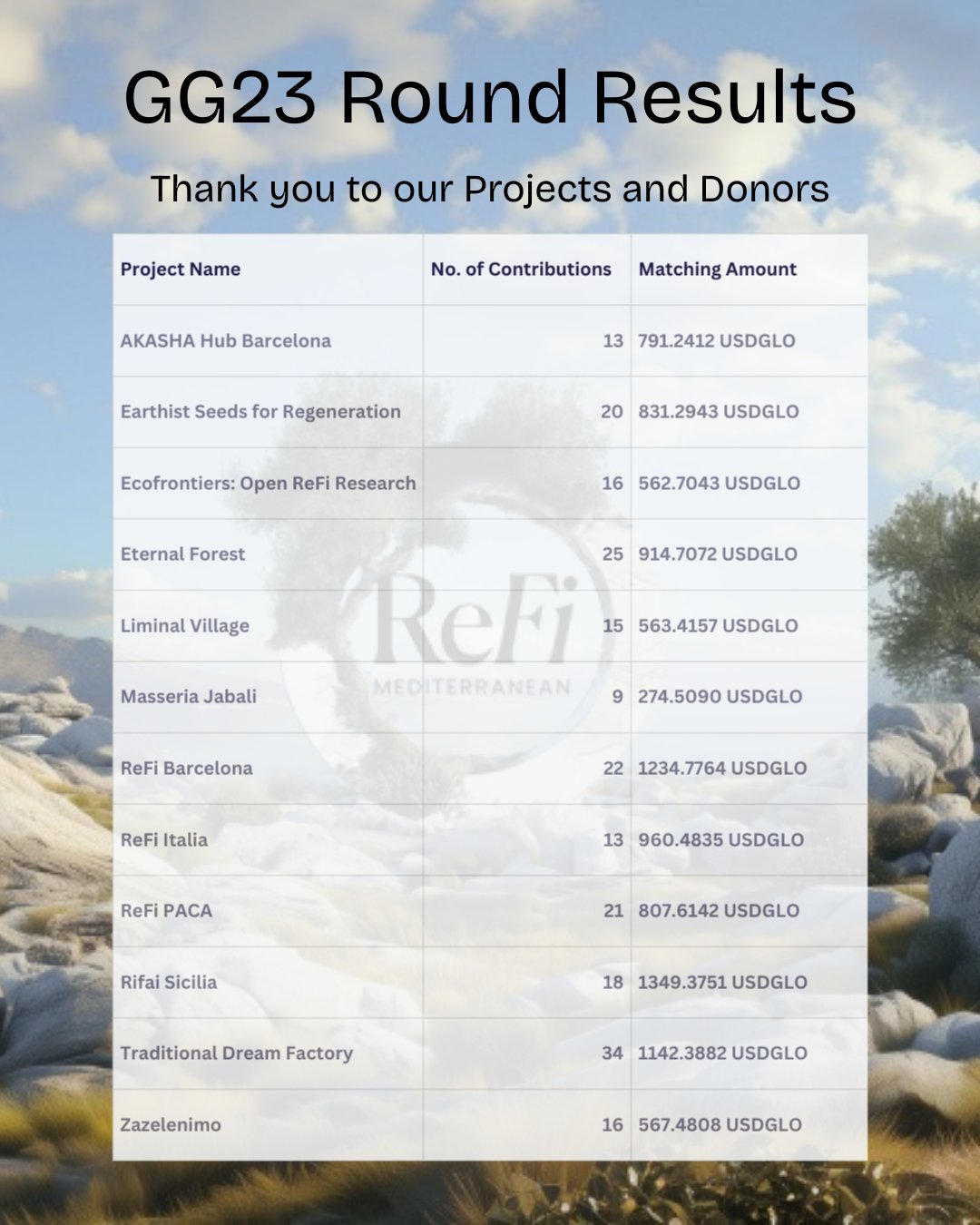
Key Results
- 12 projects participating
- 71 unique contributors
- 206 donations made
- $1,064 donated to the projects
- $10,000 matching funds distributed
AI ImpactQF Implementation
Building on the Regen Coordination Global Round, the ReFi Mediterranean Round became the first localized, bioregional round to implement AI‑driven ImpactQF, embedding impact measurement (alongside the standard COCM QF) into fund allocation.
Implementation steps:
- Project reporting on Karma Gap
Projects documented their activities, deliverables, and metrics using the Common Approach to Impact Measurement. - AI-Augmented Evaluation
AI evaluation reports + Round Operators evaluation - ImpactQF matching
Impact and COCM scores were combined in the matching formula.
To ensure feasibility within tight timelines, we adopted key elements from the Regen Coordination Global Round:
- Regen Coordination’s Project Evaluation Methodology - including evaluation criteria following the Regen Coordination’s Core Mission and North Star Outcomes
- Hybrid model for implementing ImpactQF:
- 50% based on the Impact Score - project’s final score, derived from the AI-generated reports and the reviews by human evaluators.
- 50% based on COCM QF matching - Gitcoin’s default QF COCM results, reflecting the number of unique donors, wallet behaviors, and total contributions per project.
Evaluations & Results
- Project pages & AI evaluation reports:
- Includes data from KarmaGap and Gitcoin (project pages) and both Claude 3.7 and GPT-o4-mini evaluation reports prepared for all projects.
- Evaluation spreadsheet:
- Includes AI reports, human scores and final matching allocations.
Key Trends & Observations
Compared with the Regen Coordination Global Round:
-
Activity & output reporting
- Lower quality of reporting.
- Greater need for onboarding support for groups new to Gitcoin and Web3.
-
Evaluation methodology:
- Projects scored lower on criteria 1 and 2 (Web3/Ethereum alignment), so activity in these areas had a stronger effect on final scores.
- A specific rubric for ReFi Mediterranean is needed to emphasize social and ecological impact over pure Web3 alignment.
-
Same trends as in the Regen Coordination Global Round:
- Impact-first approach: Projects with high QF support but low impact scores received reduced allocations, demonstrating the hybrid model’s
- Funding is more evenly spread across the ecosystem — rewarding a wide diversity of approaches, regions, and organizational maturity levels.
- Healthy middle: Most received between $500–$1,500.
- No extreme outliers: The lower end of the distribution still received meaningful relative allocations, showing the model’s ability to lift smaller or emerging initiatives.
Moving Forward
-
Develop Mediterranean-specific evaluation criteria that better reflect the region’s unique needs - prioritizing ecological and social impact while appropriately weighting Web3 adoption criteria.
-
Establish a Mediterranean impact measurement framework that captures region-specific regenerative indicators relevant to Mediterranean ecosystems and communities.
-
Enhance project onboarding and reporting support with dedicated workshops, templates, and one-on-one assistance to improve both participation and impact documentation quality for new projects.
-
Expand local engagement by leveraging the successful projects from this round as ambassadors to bring more regional initiatives into the Web3 regenerative ecosystem.
-
Consider adjusting the impact/COCM weighting based on round learnings - potentially increasing the impact evaluation component for more established projects.
Thanks for all the sponsors (@owocki, Celo Public Goods, Ma Earth & ReFi Mediterranean), round operators (myself and Antonio @regenavocado, with good support from @MontyMerlin) and all the projects participating for making it happen!