Hi Loie,
Great to see this policy moving forward. Keep pushing, and thanks for the opportunity to offer some constructive critcism.
General Thoughts
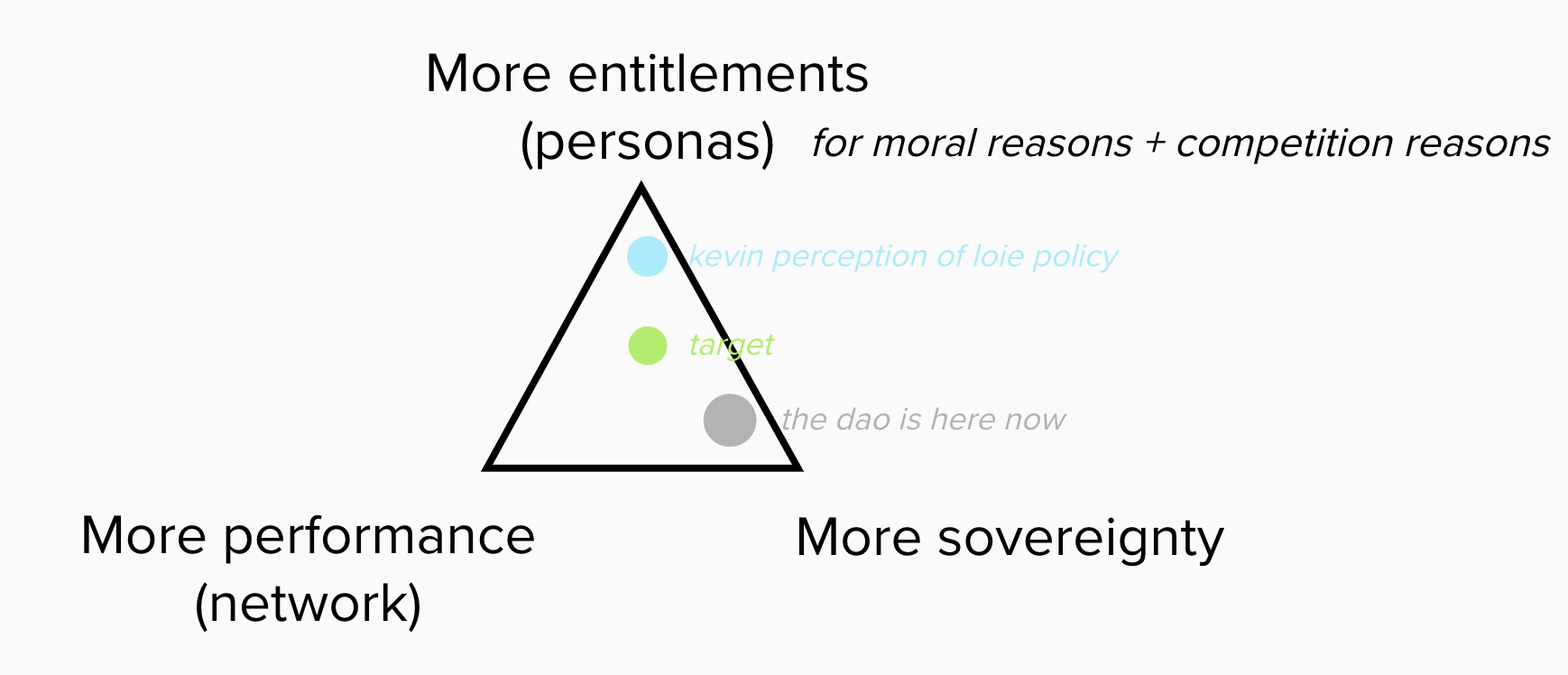
Generally i think a comp policy could aim for :
- More performance for network
- More sovereignty for workstreams (or people)
- More entitlements for people
(note I make no judgement about entitlements being legitimate or not here, there are many moral and competitive reasons to have various entitlements for people. There are many entitlements (healthcare, benefits, live-able and competitive wages to start) that I personally think are extremely legitimate.
A good proposal should transcend and include these 3 criteria. I think a balance of these things could be achieved (this is the green dot in the diagram above) and is the target for me personally.
Major Items
My major worries with this policy:
- This proposal doesn’t tie contributor comp to dao success.
- Where is the shared sacrifice in a bad market and shared success in a good one?
- Missing the financial analysis to know how much comp the DAO can support.
- The policy is doing a massive disservice to the DAO if it commits to entitlements beyond what the economic model of the DAO can support. A perfectly level + fair compensation policy that will only lasts 3 months does no good for anyone.
- I know the DAO has not hired its finance lead yet, but it does have llamas already - who posts a monthly financial report and solicits feedback about what people need on it. A very basic analysis could be done just using S14 numbers.
- The market is hemorrhaging value right now, and given how much the DAOs success is tied to the crypto markets, I think survival of the DAO should be everyone’s top priority right now. So this is a big showstopper for the DAO ratifying the proposal IMO.
Minor Items
Less major (but not insignificant) worries:
- Is it very above market to do us base + 30%
- base should be comparable should be seed stage startups not mature web2 companies.
- (I’m not convinced it is right to tie all global compensation to US salaries).
- Missing parts to the comp policy.
- This proposal offers no consideration for grandfathered in ppl.
- no consideration for project work.
- no consideration for sovereignty of workstreams.
- I worry that having a centralized compensation committee approving rates violates the sovereignty of the workstreams to hire who they want, how they want. I share Maxwells concern here.
- If the past hiring guides have not been useful for DAO workstream leads, I think that is an opportunity to figure out how People Ops can solve the problems that are in demand from workstream leads - making policies mandatory is not the solution.
- I have seen a major demand for accountability in each of the surveys we’ve done, and I’m concerned that our comp policy does not seem to speak to accountability at all.
- On salary transparency:
- I am not strongly pro or against salary transparency, but I also haven’t seen any demand for salary transparency being voiced organically - which makes me think it’s not much of a priority.
- It’s not been on the top 3 list of concerns from in the surveys about people problems to fix that I’ve seen (though Kyle did ask for a compensation policy in his answer to the latest “People Success - Problems” doc).
- IMO There should be a broad consensus about salary transparency or individuals should be given an opportunity to consent to disclose salaries should be given before doxing anyone’s salaries. Stating that there is already an implicit policy of salary transparency just because people are careless about not doxing their addresses (or not using ZK tools to achieve privacy) is not a good argument for salary transparency IMO.
- I am not strongly pro or against salary transparency, but I also haven’t seen any demand for salary transparency being voiced organically - which makes me think it’s not much of a priority.
Thanks for allowing me to list out these constructive criticisms. I will support whatever the DAO decides to ratify here!